
NaN

Nature Proximity - a Fetish?
This is the first in a series of 3 blogs responding to research from residency @ Battersea Arts Centre March 2026 + Climate Grief Café @ DAC to create new project(s) exploring ecology and ancient grieving practices, work funded by Arts Council England and National Lottery.
New Project Blog Series, 1: Nature Proximity - A Fetish
At Climate Grief Café that took place at Dugdale Arts Centre last month, the people who attended offered such a range of ideas connected to nature and grief. In part of our conversation we talked about memories of sharing physical proximity to living animals/creatures and excitement, joy or anxiety that we drew from this.
This reminded me of a childhood memory. I was outside and a small bird for a moment landed on my arm. I remember the feeling of its tiny but strong body vibrating with the power of its wings and the feeling of the air moving around it. This fleeting moment lodged in my brain, an unlikely close encounter with something wild.
From pets to safaris, from nature parks to feeding the ducks and seagulls, from bird watching to swimming with dolphins and even sharks, within 21st century life we clearly still have a strong and even fetishistic desire to be physically close to animals/creatures. How can this be? When our separation of anything close to wild from our lives signifies our deep mistrust and fear of the wilderness, a recognition of our fragility and deep impermanence. Despite this we still desire survivable glimpses of encounter with animals/creatures, this feels instinctive.
This writing is a reflection on human desire to share physical proximity with animals/creatures and what this might indicate about us, our culture and how we live.
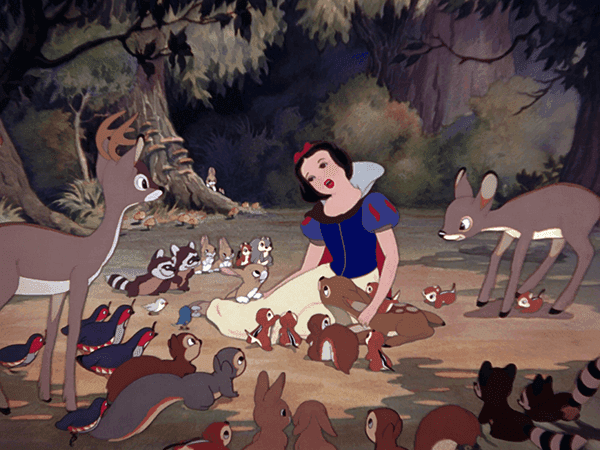
Snow White cartoon - Walt Disney 1937
An image that immediately comes to mind to do with this idea is from Walt Disney’s 1937 Snow White cartoon. To add to the long list of offensive and outdated things that appear in this film, lets think about the human/nature idealised imagery. In this image there is a dark wood, a circle of various sized animals and birds surrounding Snow White, the human is at the centre of the frame, her arm is even around a small deer that is resting its head on her lap. At certain points in the film these animals even help Snow White with domestic chores, they sing with her in a chorus beautiful sweet songs. In the detritus of my brain whenever I get slightly close to a bird or squirrel, this image comes to mind. Does this saccharine cartoon typify how humans aspire to be in relation to the natural world?
The animals are Snow White’s ‘friends’ and she is possessed with almost beyond human, Francis of Assisi like qualities where the animals forego the ultimate boundary between the human and wild worlds. I know If I were to go outside right now and try to get the same kind of interaction with a blackbird it would scarper most quickly. Even one of the local cats wouldn’t be so interested or keen on me. Snow White appears saint like, possessed with supernatural qualities to be able to share this level of closeness with animals. The animals that flock to Snow White are harmless, funny, docile and compliant. They are wild, but clean and friendly, non of them appear to be apex predators. Snow White promotes a romantic projection and desire for creatures to fulfil pet like qualities for us, to be cute for us, to be playful for us, to aid us but not disturb human dominance.
Despite or maybe even because of our deeply broken and exploitative relationship to nature, our culture loves the idea of closeness between nature and human kind. We give our children any animal in a cuddly toy version to play with from a young age, humans love nature documentaries and we fall asleep to the white noise of frogs croaking, birds singing or waterfalls crashing against rocks. In 2024 Big Waves Productions released The Seal Whisperer, featuring GP and seal enthusiast Ben Burville swimming with grey seals near the Farne Islands UK. Video clips show Burville calling to seals ‘in their own language’, suggesting his supernatural Dr Doolittle style qualities, almost high fiving their fins and being ‘kissed’ as the seals rub their whiskers against his face. In a film still of his hand outstretched, the seal's nose is pointing towards him, a poised graceful moment, could this image of equilibrium between man and seal signify a less cynical relationship with animals that isn’t based on exploitation and wishful thinking? Ecologists who criticise the film appear to suggest not. Burville’s close encounters speak of the very human kind of human dominance, superiority and human centricity which he may have desired to escape from in the first place.
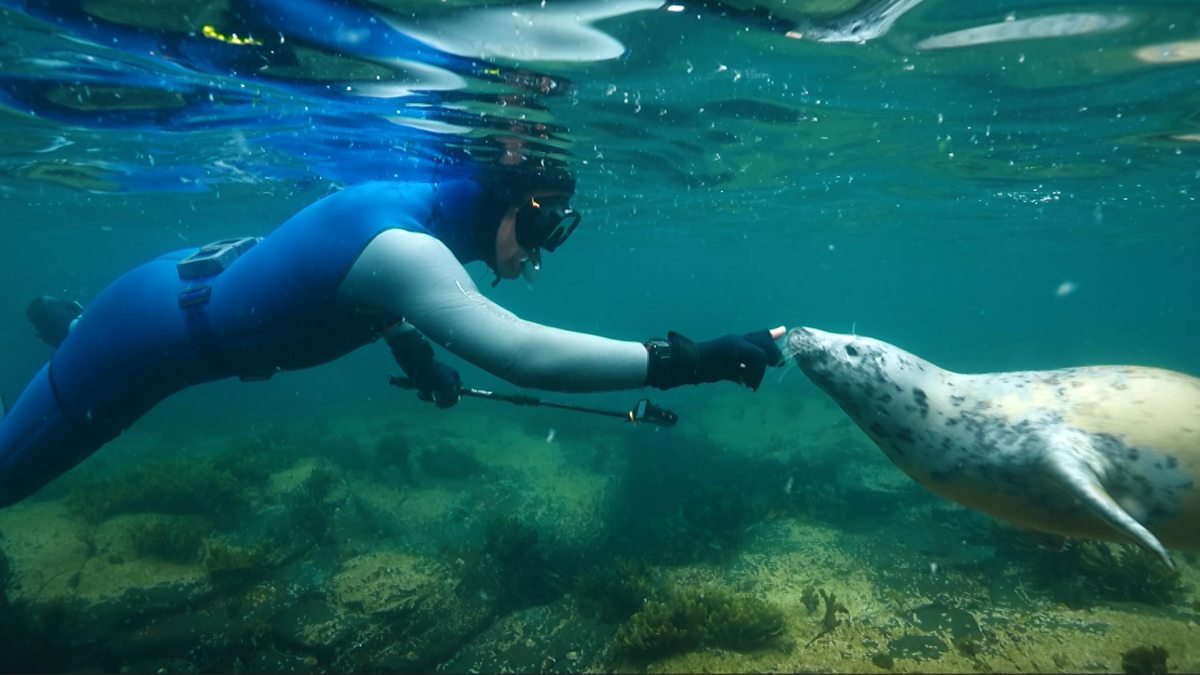
The Seal Whisperer, Big Waves Productions 2024
This continual desire for close proximity to nature suggests to me there is something deep in our psych that desires this wild encounter. From our ancient ancestors behaviours of taming dogs to hunting animals with the utmost mastery, perhaps our need to bridge the human animal/creature gap also stems from part of ourselves we are evolved for: fear, danger, excitement, which is void in sedentary, sanitised 21st century life? The less we have connection to animals/creatures in our every day life, the more we seek extreme encounters with them in the wild, going to lengthy degrees to do so. Think of tourist adventures which promote a ‘once in a lifetime’ experience such as diving in shark cages or swimming with wild dolphins.
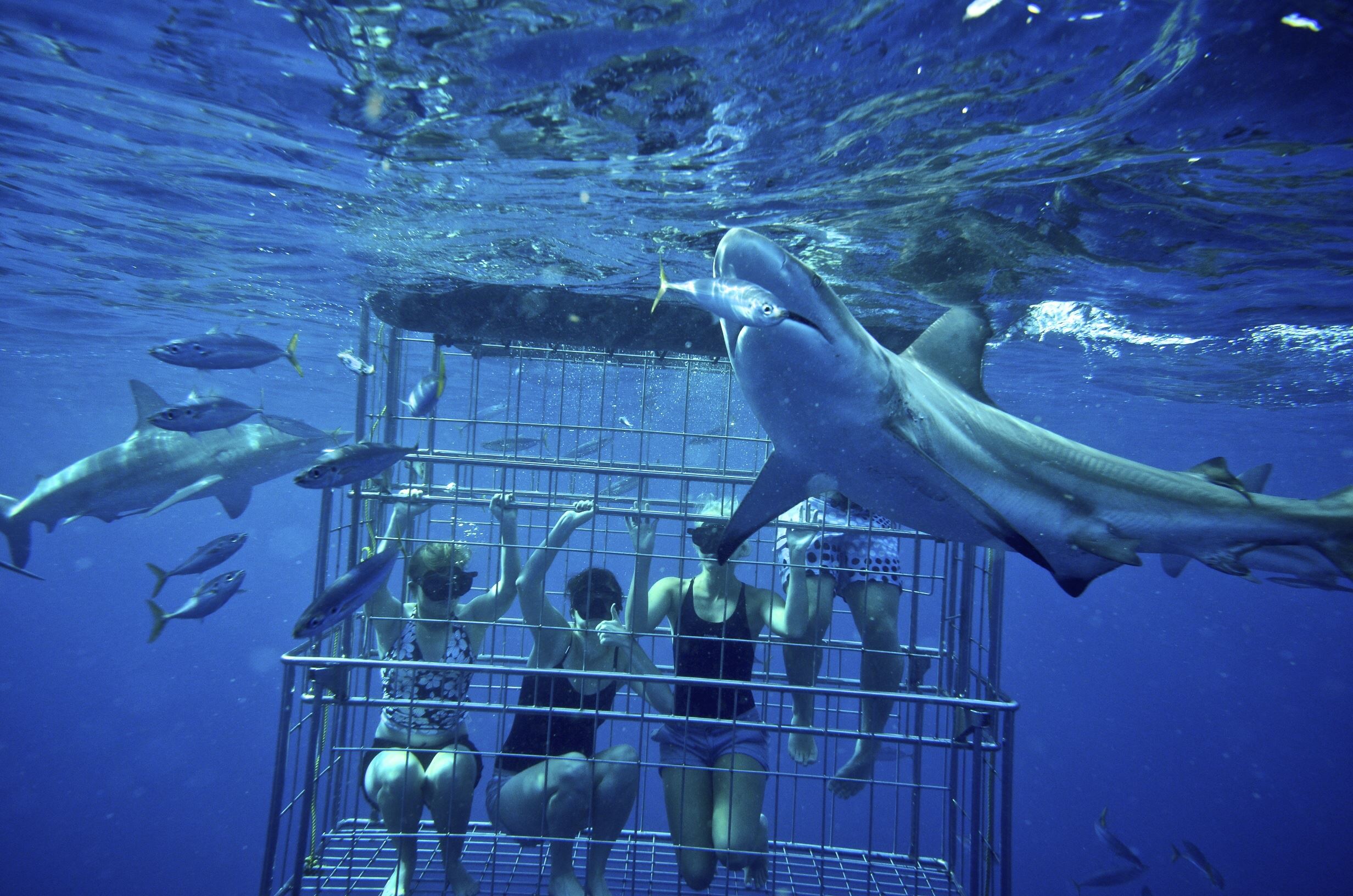
Despite concern for the animals ecological welfare through these activities, this does not stop humans desiring this experience, 'Travellers are looking for extraordinary moments that bring them closer to nature... People are clearly seeking more unforgettable experiences in 2026,' shared Letitia Smith of InsureandGo. Joe Noonan of Dolphin Whispers, a company that runs wild dolphin swimming in the Bahamas and Hawaii states ‘There’s a really good reason why so many people have swimming with dolphins on their bucket list. When you're in the open ocean and a wild dolphin comes up to you and looks you in the eye, there’s an exchange that takes place that’s profound and its life changing’.
Perhaps every person feeding pigeons in our parks and cities around the world shares this novel desire (without the expensive price tag attached), to in some way connect with another living thing and tap into common aliveness and acknowledge that at one time, we too were wild?
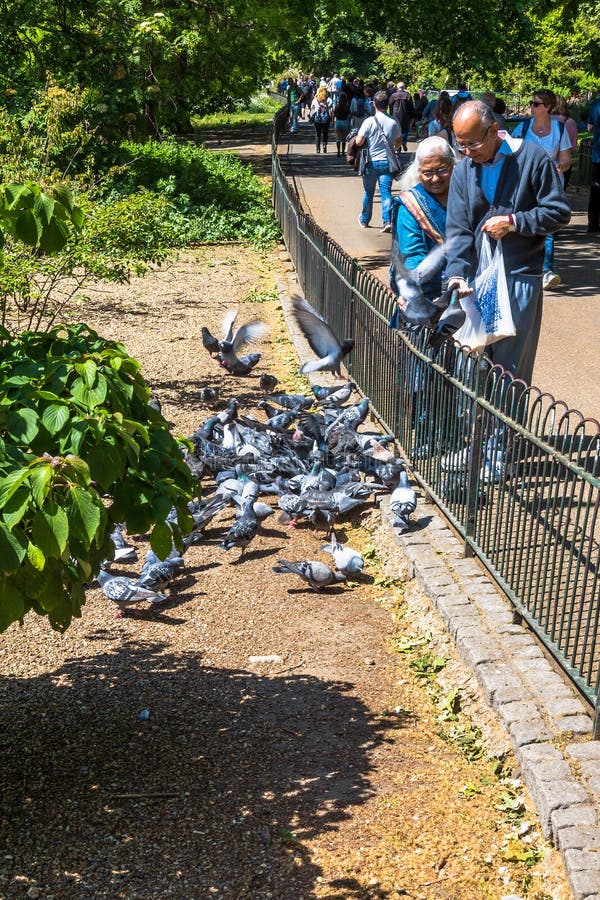
Photo - Felix Bensman
Hence the function for zoos to exist, so animals and creatures can perform this image for us which we desire. John Berger describes ‘Public zoos came into existence at the beginning of the period which was to see the disappearance of animals from every day life. The zoo to which people get to meet animals, to observe them, to see them, is, in fact, a monument to the impossibility of such encounters’… (the animals) ‘appear, for the most part, unexpectedly lethargic and dull, as frequent as the calls of the animals in the zoo, are the cries of children demanding, where is he? why doesn’t it move? Is it dead?.. Why are these animals less than believed?’.
Our drive to share close and even authentic encounters with animals in amongst 21st century life is often a simulation, ‘the zoo cannot but disappoint. The public purpose of zoos is to offer visitors the opportunity of looking at animals. Yet no where in a zoo can a stranger encounter the look of an animal. At the most, the animal’s gaze flickers and passes on. They look sideways, they look blindly beyond. They scan mechanically. They have been immunized to encounter’. There is no going back on our ecological relationship with the natural world, we are distinct from animal, perhaps our desire to seek these encounters is a kind of grief of that loss?
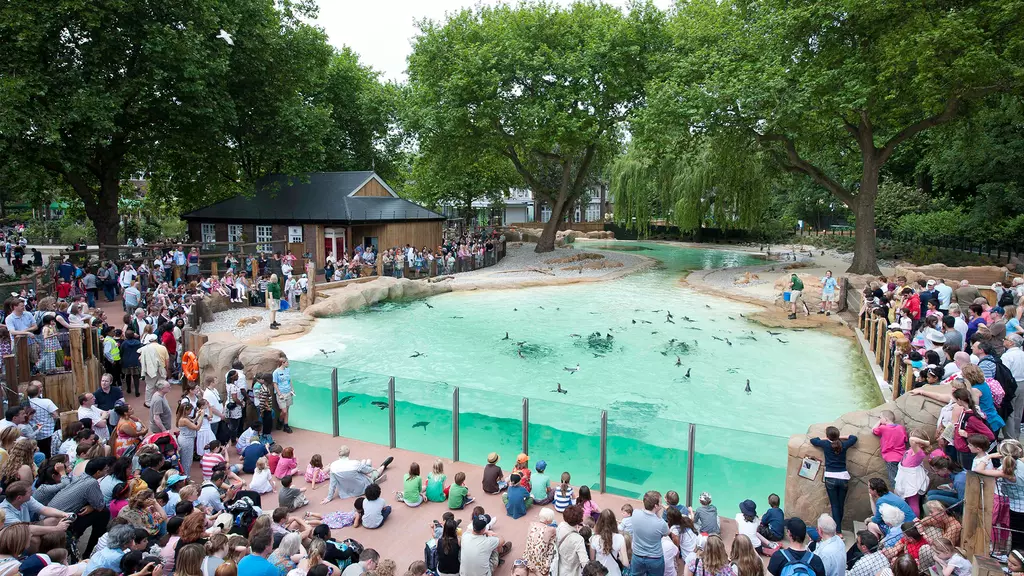
Penguin Beach, London Zoo
Inspired by this research/thoughts on nature proximity, these are some tasks whilst at Battersea Arts Centre Make Space I'm thinking about this week:
Tasks
Dress up as Snow White and attempt to find the nearest wild animal to you. Try to get close to it whilst wearing this costume.
Release a swarm of flies, bees, wasps, worms or maggots into the performance space.
Try to have no interaction with nature at all for as long as you can.
Attempt to live in the wild as long you can, this may require training in the lead up to it.
Find the closest creature you can that lives near to you, be it insect, bird, animal or plant. Let it raise your child.
Go to London Zoo and document all of the animal enclosures that are uninhabited.
Behave in a wild way during a visit to a zoo.
Build an empty zoo. Invite the public to the grand opening ceremony of it.
Take all of your childhood toys that were animals. Create new versions of them you can use/be surrounded with in your adult life.
Dress in clothes as if you were to meet someone with a powerful profession. Wear them to meet the most dangerous animal you can find on earth.
Look up the dangerous animals/insects/plants/fish in the world. Turn them into cuddly toys and sleep with them at night.
Find a way for a live animal, insect or bird to inhabit your performance space. This must not involve cruelty or exploitation.
Think of a wild creature you have always wanted to encounter. Create a simulation of your meeting with it.
Attempt to find a wild encounter in a city/or your domestic space.
Attempt to have an adventure as close to your home as you can.
Treat a 'rodent' you can find in a city with as much reverence and fascination as you would treat a wild dolphin. Organise respectful tours to meet this creature with whoever is interested.
Put a human in a nature scene you can find. Experiment with centring and de centring the human in the image through improvisation.
References, John Berger, 'Why Look At Animals?', 1980